
Packaging Trends 2026: How Leading Brands Stay Competitive
Uncover the current trends in sustainability, smart packaging, consumer experience, and design that will define 2026. Apply them before your competitors do.

Table of Contents
Every year, a handful of packaging trends get all the attention.
Most of them fade.
The ones that stick tend to solve a real business problem.
We spent the past year working with brands on the front lines and studying the packaging recognized by The Dieline’s 2025 awards.
What stood out wasn’t just creativity.
It was how fast the definition of “great packaging” is changing, driven by new regulations, smarter technology, and consumers who expect more than a nice-looking box.
The trends below are the ones we believe will matter most in 2026.
Key Takeaways
- Regulations are rewriting the rules on materials. Mono-material design, PCR content requirements, and EPR fees now determine what you can and can’t use in your packaging.
- Smart packaging turns boxes into business tools. NFC chips, RFID tags, and AR experiences are creating new revenue and engagement opportunities inside every package.
- Personalization drives loyalty at scale. Variable data printing lets brands customize packaging for individual customers without increasing production costs.
- Tactile and visual design sells more product. Soft-touch coatings, heritage typography, and bold geometry give brands a shelf advantage that generic packaging can’t match.
Sustainable Packaging Trends: Going Green Still Reigns Supreme
According to GlobeNewswire, the sustainable packaging industry is projected to grow to $737 billion by 2030.
Rising concerns over packaging waste, new regulations, and consumer demand for eco-friendly packaging are driving this surge.
These concerns now influence the purchasing decision hierarchy, especially for younger demographics who wield increasing spending power.
The shift toward sustainable packaging is instrumental in helping our society balance consumerism with protecting the environment.
However, the definition of “sustainable” has become technical.
It has moved beyond vague claims of “eco-friendliness” to measurable, certified, and scientifically valid circular systems.
Below are the sustainable packaging trends that can help brands build circularity into their operations.
The Mono-Material Revolution: Design Packaging for Recyclability
The most significant structural shift in sustainable packaging is the move toward “Recyclable by Design.”
Historically, high-performance packaging relied on multi-layered laminates, which made the materials virtually impossible to separate and recycle efficiently.
Sorting technology has improved, with the integration of machine learning in recycling centers, but the economic viability of recycling depends on purity.
This has led many brands to pivot toward mono-material structures.
Mono-material packaging allows for streamlined recycling without the need for chemical separation processes.
For retailers, this presents many advantages:
- Regulatory Alignment: Ensures compliance with Extended Producer Responsibility (EPR) laws to avoid penalties and future-proof against stricter regulations.
- Enhanced Consumer Trust: Meets the growing demand for guilt-free disposal, directly improving brand perception and loyalty.
- Operational Efficiency: Streamlines material sourcing and inventory management, potentially leading to reduced supply chain costs.
- Economic Sustainability: Increases the value and market desirability of the recovered material by guaranteeing higher purity for reprocessors.
“Paperization” of Packaging: Replace Plastic Materials for Improved Sustainability
“Paperization” has become a major trend to replace plastic packaging with paper materials to increase sustainability, and FSC-certified paper stands at the forefront of this shift.
FSC-certified paper is sourced from forests that follow strict environmental, social, and economic standards set by the Forest Stewardship Council.
By using the globally recognized FSC label, brands can credibly reduce their Scope 3 emissions.
This material choice is increasingly favored under Extended Producer Responsibility (EPR) programs, which often levy lower fees on easily recyclable and sustainably-sourced products.
This makes FSC-certified paper an excellent material choice for brands looking to stay compliant while improving circularity.
Apple’s product packaging often uses FSC-certified paper as part of its strategy to meet net-zero carbon emissions.
Post-Consumer Recycled (PCR) Material: Stay Compliant With New Laws
Post-Consumer Recycled (PCR) Material is waste collected from consumers that is reprocessed and used in new packaging.
The use of certified PCR material helps brands comply with Minimum Recycled Content (MRC) laws and Extended Producer Responsibility (EPR) programs.
Non-compliance results in financial penalties.
Brands are adopting PCR materials to manage regulatory risk, join the circular economy, and avoid fines.
Using PCR in your packaging also reduces the need for virgin materials, such as cutting down trees and extracting more fossil fuels.
In a circular economy, this approach maximizes the lifecycle of packaging materials, reduces the strain on ecosystems, and minimizes landfill waste.
Soy & Water-Based Inks: Lower VOCs, Cleaner Recycling
These inks replace petroleum-based inks and contain lower Volatile Organic Compounds (VOCs).
They’re derived from renewable resources like soybeans and use water as a solvent to produce eco-friendly ink for packaging.
This approach also makes the de-inking process in paper recycling more efficient and supports the recyclability claim of the entire package.
This packaging trend is driven by stricter environmental regulations that target VOC emissions from printing operations.
Soy and water-based inks minimize emissions from VOCs that can lead to air pollution, smog, and health risks when inhaled.
The goal is to create cleaner air and safer working conditions.
Emerging Materials That Position Your Brand as a Sustainability Leader
Most consumers know about the most popular sustainable materials, like recycled paper or cardboard.
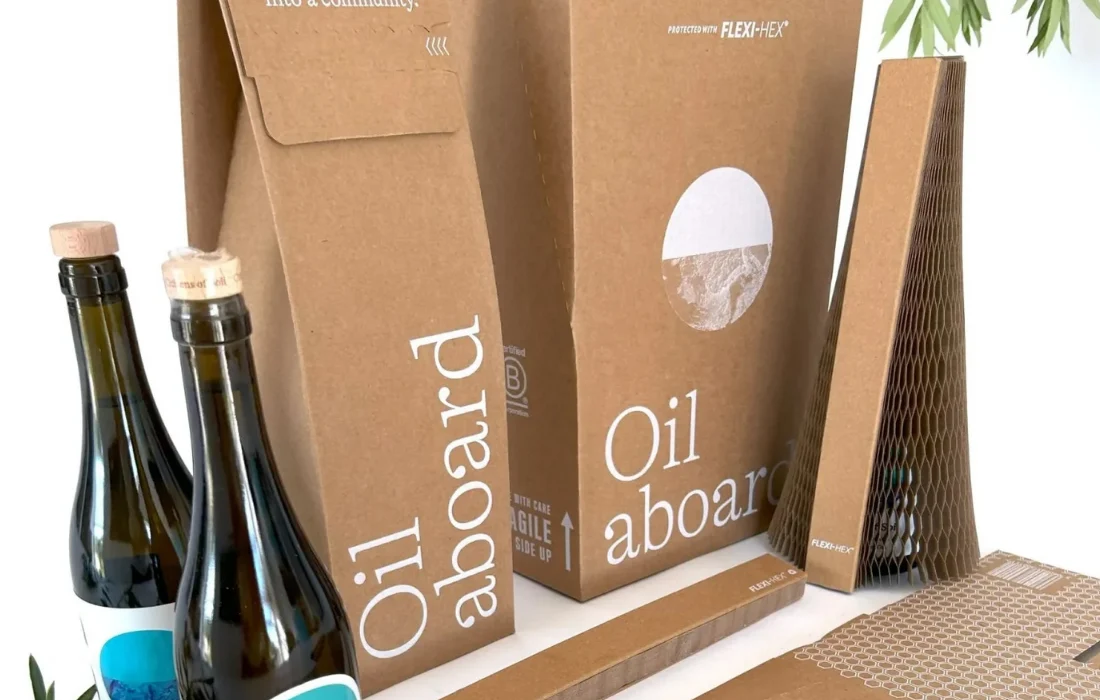
However, emerging solutions like BDP® Biotechnology, sugarcane (Bagasse), or cornstarch (Polylactic Acid) are poised to revolutionize the industry.
Use one of these innovations in your packaging and develop a communications strategy around it to position your brand as a leader in sustainability.
According to GlobalData, there are 50 companies, spanning technology vendors, established packaging companies, and up-and-coming start-ups engaged in the development and application of RFID-integrated packaging
Packaging Gateway
Lightweighting: Cut Shipping Costs Without Losing Strength
Lightweighting has become a cornerstone of a sustainable packaging strategy.
Reducing the weight of packaging without compromising structural integrity enables retailers to reduce material consumption and transportation costs.
Advanced manufacturing techniques are enabling the production of thinner, yet stronger, corrugated boards.
For instance, high-performance papers with enhanced fiber alignment can provide the same stacking strength as traditional boards at a fraction of the weight.
This has a powerful effect on sustainability:
- Lighter packages mean more units per pallet.
- Fewer trucks are needed for shipping.
- Reduced fuel is burned per shipment.
- Less packaging material is consumed overall.
However, lightweighting is not only about using less.
It is also about “right-sizing.”
Automated systems that custom-cut packaging to the exact dimensions of the product eliminate void fill and reduce the overall weight.
This addresses the issue of “shipping air,” which is a financial burden due to dimensional (DIM) weight pricing models used by logistics carriers.
Eco-Luxury Packaging: Raw Finishes That Signal Premium Quality
A key development in the luxury sector is the concept of “Eco-Luxury Packaging.”
In the past, luxury packaging was synonymous with excess: heavy glass, multiple layers of unrecyclable mixed materials, and excessive plastic lamination.
The new paradigm declares sustainability as a luxury.
Here are the key elements of eco-luxury packaging:
- Natural Look: Consumers now perceive unbleached, textured, and visibly recycled materials as indicators of high quality.
- Raw Finishes: Brands are moving away from high-gloss finishes in favor of uncoated papers that showcase raw fibers.
- Printed Premium Textures: Innovations in decorative printing allow for the creation of premium textures.
This allows brands to maintain a sensory experience of exclusivity while ensuring the packaging remains curbside recyclable.
Carbon Labeling: Prove Your Sustainability Claims With Data
Transparency is the currency of trust in 2026.
Just as nutritional labels empowered consumers to make health-conscious food choices, “Carbon Labels” are empowering them to make eco-conscious purchasing decisions.
Retailers are printing carbon footprint data directly on packaging and detailing the emissions associated with the product’s lifecycle.
This packaging trend is driven by certification bodies and an increasing regulatory push for anti-greenwashing.
The certifications below have become essential trust signals with eco-conscious consumers:
- Forest Stewardship Council (FSC)
- Global Recycled Standard (GRS)
- Carbon Trust
- Biodegradable Products Institute (BPI)
- How2Recycle Label
- Cradle to Cradle Certified (C2C)
For retailers, the strategic advantage lies in the ability to prove sustainability claims with verified data.

Smart Packaging Trends: Every Package Is Becoming a Data Channel
The widespread adoption of AI is revolutionizing the consumer-brand relationship by turning every package into a digital asset.
This trend is referred to as “Connected Packaging” and is a key component of “Packaging 4.0.”
Brands are transforming physical packaging into a data-gathering node and media channel, with technologies such as:
- QR codes
- Near Field Communication (NFC) tags
- Radio Frequency Identification (RFID)
- Interior of Things (IoT)
Let’s explore these advanced technologies driving the smart packaging revolution.
Quick Response (QR) Codes QR Codes: Instant Access to Product Info and Promotions
QR codes can serve as a bridge between physical products and digital product information.
Imagine the opportunities “talking” packages open up for brands beyond accessibility functions.
This technology offers consumers instant access to product details, usage instructions, and promotional offers.
Near-Field Communication (NFC): Embedded Chips That Unlock Exclusive Content
Similar to QR Codes, NFC tags can be embedded into packaging to give consumers access to detailed product information or exclusive digital content.

Cosmetic brand Clinique launched the first NFC-enabled packaging for skincare in 2022 that allowed users to access:
- Exclusive content
- Coupons
- Personalized questions and tips
- Product reviews
- Live chat feature
Since then, the NFC-embedded packaging market is projected to see rapid growth, quadrupling from $5.87 billion in 2025 to $19.22 billion by 2034.
These projections show how brands are shifting from traditional tags toward labels and stickers with embedded NFC chips.
Pragmatic Semiconductor produces flexible integrated circuits (FlexIC) that can be easily embedded in packages to make them intelligent and interactive.
These embedded FlexIC tags transform the package into a dynamic digital gateway, enabling advanced customer engagement, including:
- Interactive product tutorials
- Exclusive discounts and promotions
- Direct loyalty program registration
- Real-time feedback loops
- Product authenticity
Radio-frequency Identification (RFID): Real-Time Inventory Visibility Across the Supply Chain
While RFID has been around for decades, it is experiencing a renewed wave of adoption in retail.
This is mainly driven in part by reduced costs, advances in AI, and the need for real-time visibility between manufacturers, distribution centers, and customers.
Companies can also use the data collected from RFID tags to support better decision-making in inventory management, compliance reporting, and operational planning.
Augmented Reality (AR) & Virtual Reality (VR): Interactive Experiences That Start on the Package
Augmented reality (AR) overlays digital content in the real world through devices like smartphones or AR glasses.
Virtual Reality (VR) immerses users in a completely virtual environment, typically using headsets or physical spaces.
Merging AR and VR with packaging creates deeper consumer engagement by turning static designs into dynamic experiences.
When consumers view packaging through a device, interactive 3D visuals can animate and create a unique storytelling angle.
A great example is Jack Daniel’s AR app by Brown-Forman spirits and wine company.
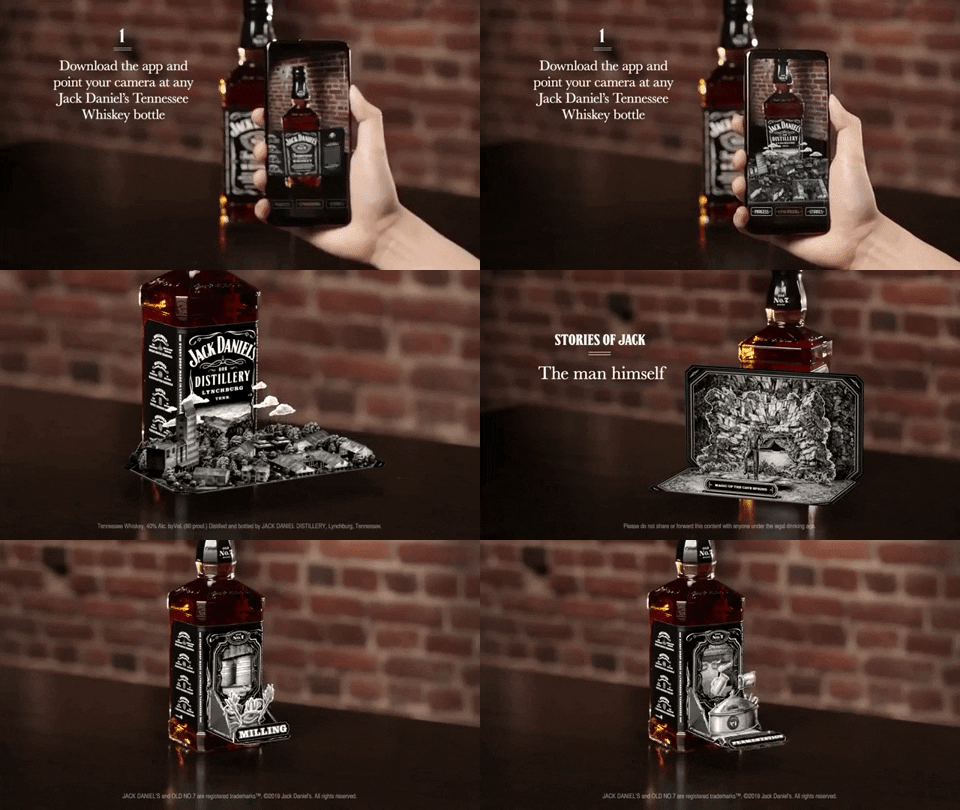
This gives users an immersive tour of the Jack Daniel’s Distillery using pop-up book-style visuals.
Within a month of its global debut, the app attracted over 30,000 users, who collectively viewed over 110,000 AR experiences, averaging a session time of 5:42 minutes each.

The Consumer Experience: Consumers Now Expect Packaging to Feel Personal
Personalization in packaging refers to using advanced analytics to tailor packaging designs to individual customers.
For instance, care/of uses online surveys to collect customer data, create personalized vitamin regimens, and print the customer’s name on the packaging.
This level of customization ensures their packaging creates a strong emotional connection and delivers a personalized customer experience.
In an era of algorithms, consumers are starting to expect their physical experiences to be as personalized as their digital feeds.
The personalization techniques below can help brands build stronger and longer-lasting relationships with their customers.
Digital Printing: Customize Every Package Without Slowing Production
Digital printing technology has revolutionized the economics of customization.
Unlike lithographic printing, which requires expensive plates and long setup times, digital printing allows for “variable data printing” (VDP).
This means every single package on a production line can have a unique design, name, or message without slowing down the process.
Retailers can leverage digital printing for different initiatives:
- Hyper-localized campaigns
- Seasonal limited editions
- Direct-to-consumer (DTC) personalization
- Rapid A/B testing of designs

Unboxing Design: Engineer Shareable Moments That Market for You
When brands design the “Unboxing Experience” for emotional impact, it can become a potent viral marketing asset.
This requires the structural engineering of the package to be choreographed with a “reveal” sequence that maximizes suspense and visual payoff.
To achieve this, retailers are designing interior prints, hidden messages, and layered compartments, while encouraging consumers to film and share their opening ritual.
This User Generated Content (UGC) acts as high-value, low-cost social proof.

Accessible & Inclusive Packaging Design: Make It Easy to Open and Use
Inclusive design is shifting from a compliance requirement to a market expansion strategy.
“Universal Design” principles ensure packaging is accessible to older adults, the visually impaired, and those with limited dexterity.
Innovations include high-contrast NaviLens codes that can be scanned from a distance—up to 3 meters—by visually impaired shoppers to hear product information.
Tactile markers, such as Braille on Olay bottles, allow for identification by touch.
Then, there is “wrap rage.”
“Frustration-Free” packaging that requires no tools to open is also becoming standard.
This benefits not only those with disabilities but also the general population who find it difficult to open a package, and potentially damage the product in the process.

Packaging Design Trends: Creativity Is Becoming a Brand's Most Strategic Asset
Packaging has evolved from a protective container into one of a brand’s most influential marketing assets.
Every packaging design choice is now crafted to build trust, signal value, and convert consumer values into purchasing decisions.
The packaging design trends below illustrate how aesthetics function as a strategic tool in modern retail.
Minimalist Structure: Bold Geometry That Stands Out and Ships Flat
Minimalism prioritizes structural efficiency by utilizing the minimum amount of material and the simplest possible construction.
This helps aid in both manufacturing and end-of-life disposal.
A key visual element we’ll see in 2026 is bold and geometric forms.
This design approach uses three-dimensional shapes, sharp angles, or distinct proportions to become the primary identifier on the shelf.
The driving factors behind this trend:
- Simple structures signal material efficiency to eco-conscious consumers.
- Sculptural forms allow brands to differentiate their product and convey premium quality.
- Geometric shapes perform well during e-commerce transit and reduce the need for secondary protective packaging.
Modern Heritage: Vintage Aesthetics That Build Consumer Trust
Counterbalancing the minimalism trend is “Modern Heritage” and “Neo-Antique” aesthetics.
In times of uncertainty, consumers crave the stability and comfort of the past.
Packaging designs are incorporating 1950s typography, apothecary-style grids, and intricate line work that suggests craftsmanship.

Cultural Storytelling: Regional Art That Creates Emotional Connection
Brands are also using packaging to tell culturally specific stories.
Local sourcing is highlighted through regional art styles, and inclusive storytelling celebrates diverse backgrounds.
For example, Middle Eastern luxury packaging might integrate geometric patterns, calligraphy-inspired designs, and modern finishes to convey both heritage and modernity.
This approach fosters a deeper emotional connection than generic global branding.
Tactile Premium Finishes: Textures That Make Customers Pick Up Your Product
In a screen-saturated world, the sense of touch has become a luxury.
Tactile finishes are being used to disrupt the shopper’s autopilot.
Research suggests that tactile engagement can increase perceived ownership.
Soft-touch matte coatings, raised UV varnishes, and grit textures induce a subconscious perception of higher value.
Digital embellishment technologies, like Scodix, allow these textures to be applied without expensive tooling.
This aligns with the previously mentioned trend, “Eco-Luxury,” where the rough texture of recycled paper or the grain of a molded fiber insert serves as a tactile proof of a brand’s sustainability claims.
Creative Retail Packaging Turns Trends Into Precision Programs
As we stand on the threshold of this transformation, it’s time to get excited for a dynamic year in packaging.
Consumer experiences will be redefined through the union of sustainability, connectivity, personalization, and brand storytelling.
With us as your strategic packaging company, we can help you take advantage of these packaging trends, including:
- Sustainable material transformation
- Compliance and risk mitigation
- Innovative structural design
- Premium sensory finishing
- Verifiable certifications
Join us in shaping the future, and we’ll help you ascend to new heights with innovative packaging solutions.